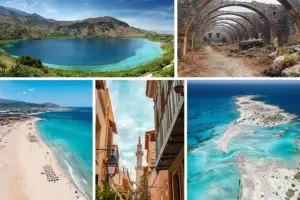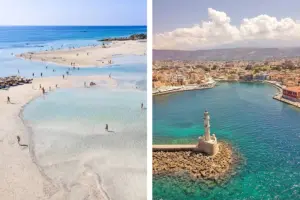
Driving in Crete gives you access to beaches, villages and places outside the main towns. You drive on the right and a regular car is suitable for many trips using paved roads. The part that needs more planning is choosing your route and allowing enough time for it. A journey along the north coast can feel quite different from a drive through mountain villages. Before booking your car, think about where you want to go and how comfortable you are with narrow roads, bends and hills.
Is driving in Crete difficult?
It depends on the route and what you are used to. Busy town streets, unfamiliar junctions and finding parking may need more attention than the drive between destinations. Away from the main roads, expect narrower sections and slower journeys. A place that looks close on the map may take longer to reach because the road goes around hills or through villages. For your first days. choose a shorter trip and give yourself time to get used to the car. If you normally drive on the left, pay particular attention when turning out of car parks or joining a quiet road. You do not need to fill every day with a long drive. Leave time to stop, eat and enjoy the places you came to see.
What driving licence do you need?
Bring your original, valid driving licence. A full licence issued by an EU country is recognised in Greece. A provisional or learner licence is not a substitute. Visitors with a UK photocard driving licence can use it in Greece. Different requirements can apply to older UK paper licences. For licences issued elsewhere, check the requirements for the country that issued your licence before travelling. Depending on the licence, you may need an International Driving Permit alongside it. An international permit does not replace your national licence. You also need to check the rental company’s terms and conditions. Minimum age, how long you must have held your licence and the documents required at collection can differ from the basic legal requirements for driving.
You can contact GOAT Rentals before booking, to confirm what you need. If someone else will share the car, make sure they are included in the rental agreement.
What are the speed limits in Crete?
Crete follows Greek traffic law. Since 1 January 2026, the general speed limit within built up areas is 30 km/h, unless signs specify otherwise. A 50 km/h default applies to certain urban roads… one way streets with at least two marked lanes, two way roads with at least two marked lanes in each direction and two way roads with a central dividing island.
For a standard passenger car without a trailer, the national default limits outside built up areas are:
- Ordinary paved roads | 90 km/h
- Expressways | 110 km/h
- Motorways | 130 km/h
- Unpaved roads | 40 km/h
Follow the posted limit for the section you are driving on. These national defaults do not mean that every main road in Crete permits the same speed. A navigation app can help with directions, but the signs on the road take priority over the speed limit displayed on your screen. Reduce your speed further when visibility, weather or the road surface requires it.
Junctions, roundabouts and everyday rules
Read the priority signs at each junction and roundabout. Do not assume that vehicles already on a roundabout always have priority. At unsigned junctions, the general rule gives priority to traffic from the right, subject to exceptions such as vehicles emerging from car parks or dirt roads. Everyone should wear a seat belt. If you are travelling with children, arrange a suitable child restraint before collecting the car and check that it is correctly fitted.
Do not hold or operate your phone while driving. Set your navigation before moving and stop somewhere safe if you need to change the route. If you are driving, the simplest plan is to leave alcohol for another time. Greece has different alcohol limits for different driver categories, including a lower limit for novice drivers.
Driving on mountain roads and through villages
On winding roads, slow down before the bend and keep enough space from the vehicle ahead. Stay within your lane, even when the road looks quiet. In villages, look out for pedestrians, parked vehicles and entrances opening directly onto the road. Leave room for an approaching vehicle rather than trying to squeeze through a narrow gap. Do not let a driver behind you pressure you into going faster than the conditions allow. If you want to let them pass, use a safe, legal stopping place. The shoulder or emergency lane is not an extra driving lane.
If you are unfamiliar with mountain roads, plan your first longer journey during daylight. Driving back after a beach sunset may sound appealing, but it also means navigating the same bends in the dark. For steep descents, use the appropriate lower gear or downhill mode for your vehicle. Ask how it works when collecting the car if you are unsure.
Can you take a rental car on dirt roads?
Check your rental agreement before taking an unpaved route. A road appearing on a map does not confirm that your rental car is permitted to use it. Balos is a useful example: the road approach includes an unpaved section. Before choosing that route, ask what is permitted and what the insurance covers. The same applies to a shortcut suggested by your navigation app. If it leads onto a rough track, find a safe place to stop and check the route rather than continuing because the app says it is quicker. Choosing an SUV does not automatically give you permission to drive off the road. Vehicle capability and rental conditions are separate things.
Parking and getting to your accommodation
Before driving to an Old Town hotel, ask where you should leave the car and unload your luggage. In Chania, access to parts of the Old Town is restricted, so the hotel’s map pin may not be a suitable driving destination. Use designated parking spaces and read the signs before walking away. Check whether payment is required, whether there is a time limit and whether you can collect the car at the time you need. In small villages, avoid blocking entrances or leaving too little room for another vehicle to pass. A short walk from a suitable parking space is often easier than trying to get the car right outside a restaurant.
What should you check when collecting the car?
Take a few minutes to adjust the seat and mirrors, find the lights and wipers and understand how to select reverse. Check the fuel type and the agreed return fuel level. Walk around the car with the rental representative, record any existing damage and take photos. Keep the rental agreement and assistance details somewhere you can easily find them. Choose a vehicle that fits your passengers and luggage and that you feel comfortable driving. You can compare the available rental cars before deciding.
If you are arranging car rental at Chania Airport, plan a simple first journey to your accommodation, especially after a late flight.
What if the car breaks down or you have an accident?
For a breakdown, move to a safe stopping place if possible, switch on the hazard lights and contact the assistance number provided with your rental. Avoid standing beside the car where passing traffic could put you at risk. If there are injuries or immediate danger, call 112. Calls are free and operators can assist in English.
Tell the operator what happened and where you are. A road name, nearby village or location from your phone can help. Notify the rental company promptly about any accident or damage and follow its instructions for reporting the incident. Save the relevant numbers when collecting the car so you have them ready if needed.